For generations, the Algarve’s identity has been shaped as much by its cuisine as by its coastline. In this part of the world, food has never been incidental. It reflects the region’s geography, climate and traditions, serving as a direct expression of land and sea brought to the table.
Today, across the region and increasingly within destinations such as Ombria, cuisine is being reinterpreted in a way that remains rooted in place while responding to contemporary expectations.
In the south of Portugal, cuisine has always been shaped by proximity. The Atlantic provides fish and seafood; the inland barrocal offers citrus, almonds, figs and carob. Olive oil, herbs and seasonal vegetables complete a culinary framework that is both resourceful and deeply regional.
Dishes are often simple in composition, but precise in execution. Cataplanas, grilled fish and slow-cooked stews rely less on technique for its own sake and more on the quality and integrity of ingredients. This approach reflects a broader cultural attitude: food is not separated from daily life, but embedded within it.
For residents and visitors alike, meals become a way of tracing a journey through the region, one that gradually reveals and defines the Algarve’s culinary identity.
At Ombria Algarve, this relationship between land and table is not a concept layered onto the experience; it is foundational.
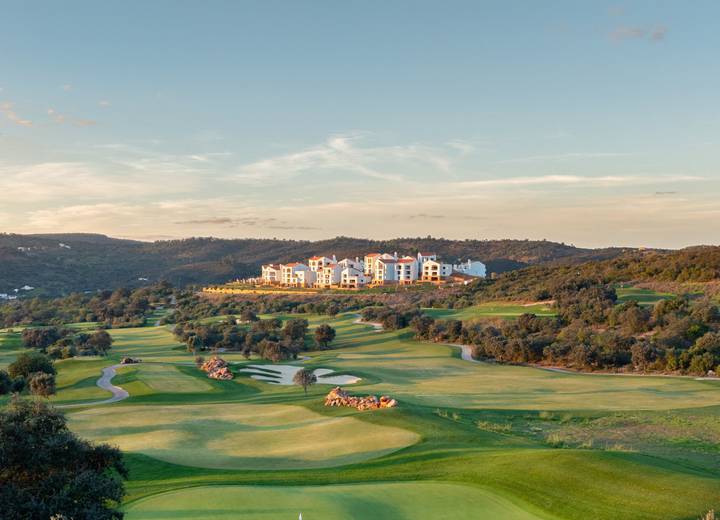
In the heart of the Algarve, within the hills north of Loulé, the development draws directly from its surroundings: cork oak forests, citrus groves and small-scale agriculture that continues to shape the local economy. Ingredients sourced from nearby producers, and in some cases grown within the estate itself, establish a local supply chain that fosters economic and social sustainability.
In that sense, dining at Ombria Algarve is an experience that becomes an extension of the landscape itself. What is served reflects what is seen all around the resort, thus reinforcing a connection between environment and experience that is increasingly valued by international visitors.
The dining venues at Ombria Algarve are structured less as standalone restaurants and more as extensions of a living village, each reflecting a different moment in the day, a different rhythm of life.
At Ombria Kitchen, the tone is set through familiarity. Designed to evoke the feeling of gathering in a traditional Algarve home, the experience centres on warmth and generosity. Seasonal dishes are created for sharing, while wood-fired ovens and a Josper grill introduce depth and texture to regional ingredients. The emphasis is on atmosphere as much as cuisine, a space where dining feels instinctive rather than orchestrated.
Café Central anchors the development socially. Positioned within the central plaza, it functions as both café and market, a place where daily rituals unfold. Coffee, pastries and regional products shape a more informal experience, reinforcing the idea that food is part of everyday continuity rather than a defined occasion.
At Casa E Fora Bar & Terrace, the setting opens outward. Overlooking the golf course and surrounding hills, it introduces a more relaxed, social dynamic, combining comfort food with an atmosphere shaped by shared experiences, from casual gatherings to live sporting moments. The emphasis shifts from dining as a focal point to dining as part of a broader social environment.
Solalua offers a more expressive layer. Here, Portuguese small plates are paired with cocktails in a setting that evolves from sunset into evening. The experience is deliberately fluid, shaped by music, light and interaction, while remaining grounded in regional flavours and seasonal ingredients.
At the Salpico Pool Bar, structure gives way to ease. The experience is intentionally informal, defined by light dishes and cocktails served alongside the pool. Portuguese influences remain present, but simplified, allowing food to integrate seamlessly into the rhythm of the day.
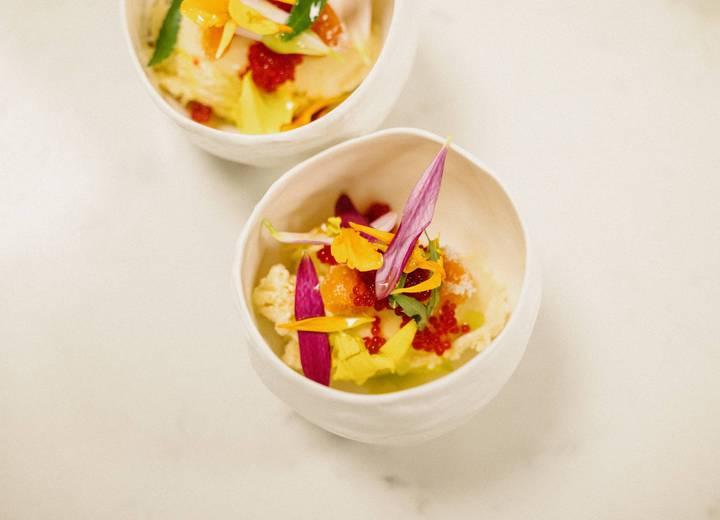
High-end dining at Ombria Algarve does not rely on elaboration or theatricality. Instead, it prioritises clarity of flavour, quality of sourcing and coherence with the surrounding environment. Luxury is expressed through attention to detail rather than scale, through the ripeness of a tomato, the balance of a dish or the setting in which it is served.
While meals are refined, they are never detached from their origins, resulting in a dining experience that feels both elevated and grounded and is closely aligned with the development’s broader philosophy.
As with the region’s property market, sustainability is becoming central to how food is produced and experienced.
At Ombria Algarve, this is reflected in sourcing decisions, waste-reduction practices, and a broader commitment to environmental responsibility. Local procurement reduces transport impact while supporting regional producers. Seasonal menus encourage diversity while allowing fruit, vegetables and other ingredients to be enjoyed at their fullest flavour, in the season in which they naturally grow.
Increasingly, diners recognise that long-term quality is inseparable from environmental balance. The future of Algarve cuisine will, therefore, depend not only on tradition but on how that tradition adapts to contemporary conditions.
To describe dining in the Algarve purely in gastronomic terms would overlook its broader significance. A meal is rarely an isolated event. It is a point of connection between people, between generations and between landscape and culture.
At Ombria Algarve, this perspective is carried through each dining experience. Whether in a more formal setting or a casual terrace, the intention is always to create a sense of continuity between plate and place.
For international visitors, this often becomes one of the most enduring aspects of their experience. Beyond architecture or amenities, it is the daily ritual of food, shaped by land, season and tradition, that defines how the Algarve is understood.
Modern Algarve cuisine continues to bring together established practices and contemporary sensibilities, maintaining authenticity while allowing for subtle evolution.
Destinations such as Ombria Algarve demonstrate how this balance can be achieved. By grounding culinary experiences in the realities of the landscape while refining their expression, they offer a model for how the region’s food culture can continue to develop without losing its identity.
In this context, more than an amenity, dining becomes a reflection of place, one that is both immediate and enduring, shaped as much by the land as by those who interpret it.